Germany
Explore the endless opportunities in top study-abroad destinations
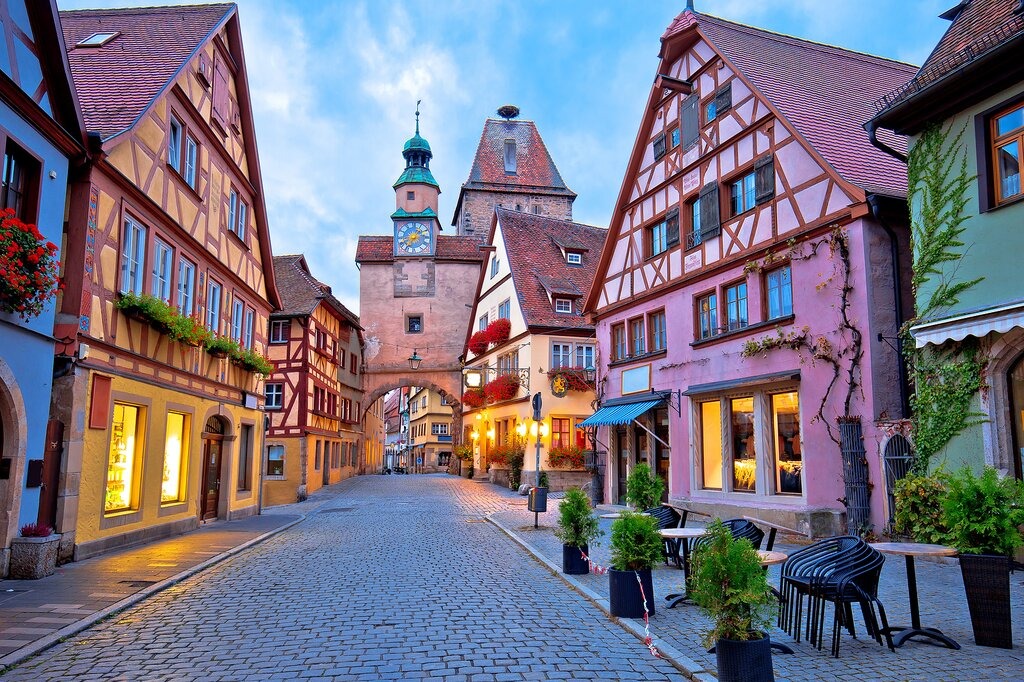
Studying in Germany offers a unique blend of academic excellence, cultural richness, and affordability. Renowned for its world-class universities and cutting-edge research facilities, Germany provides a wide range of programs taught in both German and English, especially at the postgraduate level. International students benefit from low or no tuition fees at public universities, access to scholarships, and a strong emphasis on practical learning and innovation. The country’s commitment to academic freedom and interdisciplinary collaboration makes it an ideal destination for those seeking a globally competitive education.
Beyond academics, Germany offers a vibrant student life and a high quality of living. From historic cities like Heidelberg and Berlin to scenic regions like Bavaria and the Rhine Valley, students can immerse themselves in diverse cultural experiences. Efficient public transportation, student discounts, and a strong support system for international students contribute to a smooth transition and enriching stay. Whether you’re pursuing engineering, humanities, or sustainability studies, Germany provides the perfect environment to grow intellectually and personally.
Highlights of studying in Germany
Factors
Germany
Average Tuition Fees (Per Year)
Public Universities – Mostly Free or €250–€500 per semester; Private Universities – €5,000–€20,000
Eligibility Criteria
Academic Credentials – High School Diploma (Abitur or equivalent), Bachelor's or Master's Degree in relevant field Documents – Valid Passport, Student Visa, Motivation Letter, CV, Academic Transcripts, Proof of Financial Resources Test Scores – IELTS, TOEFL, TestAS (for some programs), GRE/GMAT (for specific courses)
Test Score Requirements
IELTS – 6.0–7.0 TOEFL – 80–100 GRE – 300+ (if required) GMAT – 550+ (if required)
Popular courses
Engineering Computer Science Business Administration Medicine Environmental Sciences
Student Visa Fees
€75 for a student visa application from outside Germany Note: Fees may vary; always check official sources.
Why Study in Germany
Germany continues to be a top choice for international students, offering world-class universities, affordable tuition fees, and strong career opportunities.
Globally Recognized Education
With over 400 universities, including LMU Munich, Heidelberg University, and TU Berlin, Germany is celebrated for its academic excellence, strong research output, and high global employability.
Diverse Course Options
From Engineering, Computer Science, and Business to Medicine, Environmental Studies, and Artificial Intelligence, Germany offers a wide range of programs aligned with global job market demands. Recent surveys show that over 85% of international students in Germany report high satisfaction with their academic experience and course quality.
Shorter, Cost-Effective Degrees
In Germany, you can complete a Bachelor’s degree in 3 years and a Master’s degree in 2 years, making it a time-efficient choice for international students. Additionally, Germany offers short-term programs such as specialized diplomas and certificate courses that can be completed in 6–12 months, ideal for skill enhancement and career advancement.
Strong Post-Study Work Options
Germany is a leading destination for global careers, offering direct access to top industries such as engineering, IT, healthcare, and sustainability. International graduates can stay and work in Germany for up to 18 months after graduation to seek employment. PhD graduates may qualify for extended residence options. Additionally, the EU Blue Card is available for skilled jobs with a minimum salary of around €43,800 per year, providing a pathway to long-term settlement.
Student Visa Requirements for Germany
International students should apply for a German Student Visa as soon as they receive their Confirmation of Admission (Zulassungsbescheid) from their chosen university. The visa processing time typically takes 6 to 12 weeks for applications submitted from outside Germany.
For study programs longer than three months, students must apply for a National Visa (D-Visa). For short-term courses lasting three months or less, a Schengen Visa (C-Visa) is required. It’s essential to prepare all required documents early, including proof of financial resources, health insurance, and academic credentials.
Student visa requirements for Germany
International students should apply for a Germany Student visa as soon as they receive the Confirmation of Acceptance for Studies (CAS) from their respective university or college. The overall Germany student visa process typically takes around three weeks if applying from outside the Germany.
Applicants must apply for a Student visa (which replaced the Tier 4 (General) student visa) for programs longer than six months or a Short-term Study visa for courses lasting six months or less.

Documents Required for a Germany Student Visa (Updated for 2025)
- Valid passport
- Confirmation of Admission from the university or course provider
- Proof of sufficient funds to cover tuition and living expenses (minimum €861 per month for at least 12 months)
- Parental or legal guardian consent if the applicant is under 18
- Health insurance coverage valid in Germany
Top Courses to Study in Germany
The ten most popular courses in Germany that international students typically pursue are listed below:
Course name
Top universities
Average tuition fees (per year)
Engineering (Mechanical, Electrical, Civil)
RWTH Aachen University Technical University of Munich (TUM) Karlsruhe Institute of Technology (KIT) TU Berlin University of Stuttgart
Mostly Free (Public Universities) Private: €5,000–€15,000
Computer Science & IT
LMU Munich University of Heidelberg TU Darmstadt University of Freiburg University of Bonn
Mostly Free (Public Universities) Private: €6,000–€18,000
Business & Management (MBA, MIM)
Mannheim Business School WHU – Otto Beisheim School of Management ESMT Berlin Frankfurt School of Finance & Management HHL Leipzig Graduate School of Management
€10,000–€30,000
Medicine
Charité – Universitätsmedizin Berlin University of Heidelberg LMU Munich University of Freiburg University of Göttingen
Mostly Free (Public Universities) Semester fees: €250–€500
Data Science & AI
TU Munich University of Potsdam University of Leipzig University of Bremen University of Hildesheim
Mostly Free Private: €7,000–€20,000
Environmental Sciences & Sustainability
University of Freiburg University of Bayreuth Leuphana University University of Kiel TU Dresden
Mostly Free Semester fees: €250–€500
Psychology
University of Mannheim University of Hamburg University of Leipzig University of Cologne University of Münster
Mostly Free Private: €5,000–€12,000
Law
Humboldt University of Berlin University of Heidelberg University of Munich University of Cologne University of Frankfurt
Mostly Free Semester fees: €250–€500
Architecture
TU Berlin University of Stuttgart RWTH Aachen University of Kassel TU Dresden
Mostly Free Private: €5,000–€10,000
Health Sciences & Nursing
University of Applied Sciences Hamburg University of Witten/Herdecke University of Bremen University of Lübeck University of Regensburg
Mostly Free Private: €4,000–€10,000
Top Universities to Study in Germany
The top 10 universities in Germany as per QS World University Rankings 2025 are listed below:
Technical University of Munich (TUM)
QS World University Rankings 2025: 28
Ludwig Maximilian University of Munich (LMU Munich)
QS World University Rankings 2025:41
Heidelberg University
QS World University Rankings 2025: 65
Karlsruhe Institute of Technology (KIT)
QS World University Rankings 2025:102
Humboldt University of Berlin
QS World University Rankings 2025:120
RWTH Aachen University
QS World University Rankings 2025: 124
University of Freiburg
QS World University Rankings 2025: 140
University of Göttingen
QS World University Rankings 2025: 160
University of Hamburg
QS World University Rankings 2025: 172
Scholarships to Study in Germany
Germany offers a wide range of government-funded, university-specific, and private scholarships for international students. Each scholarship has its own eligibility criteria and application process.
- DAAD Scholarships (German Academic Exchange Service) One of the most prestigious and widely available scholarships for international students pursuing undergraduate, graduate, or doctoral studies in Germany. Covers tuition, living expenses, and travel costs.
- Deutschlandstipendium (Germany Scholarship Program) Merit-based scholarship offering €300 per month for talented students at German universities, co-funded by the government and private sponsors.
- Konrad-Adenauer-Stiftung Scholarships Available for international students pursuing postgraduate studies in Germany, especially those with strong political or social engagement.
- Heinrich Böll Foundation Scholarships Offered to students from all disciplines who demonstrate commitment to green values, sustainability, and social justice.
- Friedrich Ebert Stiftung Scholarships Supports academically excellent students with a strong sense of social responsibility. Open to international students in all fields.
- University-Specific Scholarships Many German universities such as LMU Munich, TU Berlin, and University of Heidelberg offer their own scholarships for international students based on merit or need.